

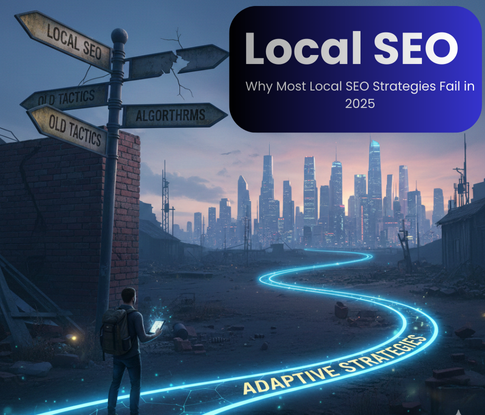
Local SEO has always been a critical component for businesses aiming to attract nearby customers. But as search algorithms, user behavior, and AI-driven technologies evolve in 2025, many local SEO strategies that once worked are now failing to deliver. If your business isn’t showing up in local searches, or worse, if your competitors are outranking you, it’s time to understand why and how to fix it.
Why Local SEO Strategies Fail
Over-Reliance on Traditional Google My Business Tactics
Many businesses still rely heavily on claiming and optimizing their Google Business Profile (GBP) without considering broader local search trends. In 2026, Google now integrate AI-driven ranking signals that consider real-time engagement, personalized user behavior, and local context beyond just NAP (Name, Address, Phone) consistency. Simply stuffing keywords into your business description or posting sporadically is no longer enough.
How to Fix:
Focus on generating meaningful engagement through reviews, Q&A, and posts that reflect current local events or trends. Use AI tools to monitor search trends in your area and adjust your profile content dynamically.
Neglecting Voice and AI-Driven Search
With AI assistants becoming ubiquitous in smartphones, smart speakers, and even in-car navigation systems, voice search is dominating local queries. Users now ask conversational questions like, “Where can I get eco-friendly car repairs near me?” Businesses that optimize only for traditional keywords are missing out.
How to Fix:
Optimize for natural, conversational language and question-based queries. Include long-tail, location-specific phrases in your content and FAQ sections. Use structured data (schema markup) to make your business understandable to AI-driven search engines.
Ignoring Mobile-First Experiences
By 2026, mobile devices account for over 80% of local search traffic. Businesses that don’t have a fast, mobile-optimized website or a seamless user experience risk losing rankings. Slow-loading pages, poor navigation, and hidden content kill your visibility and conversions.
How to Fix:
Implement a mobile-first design approach. Optimize page speed, reduce pop-ups that block content, and ensure click-to-call, maps integration, and easy directions are available. Test on multiple devices for usability.
Lack of Hyperlocal Content
Many local businesses still use generic content aimed at a broad audience. But search engines now prioritize hyperlocal content that shows expertise in a specific neighborhood or city. Without this, your business won’t stand out against competitors who are actively engaging their local community.
How to Fix:
Create content tailored to your local audience. This could include blog posts about community events, local case studies, neighborhood guides, or partnerships with local organizations. Hyperlocal landing pages and blog content can dramatically improve local relevance.
Poor Online Reputation Management
Customer reviews and ratings continue to have a huge impact on local search rankings. Businesses failing to respond to reviews, address complaints, or encourage satisfied customers to leave feedback are missing out. In 2026, AI will analyze sentiment and engagement metrics in reviews to influence rankings.
How to Fix:
Develop a structured review acquisition and response strategy. Encourage genuine reviews across Google, social media, and niche local directories. Use AI tools to analyze sentiment and track trends in customer feedback.
Underutilizing Local Link Building
Many local SEO strategies fail because they ignore link-building opportunities in their community. While backlinks are not as powerful as they once were for global SEO, local citations and authority links from nearby businesses, organizations, and media outlets are highly influential.
How to Fix:
Network with local businesses, sponsor community events, write guest posts for local blogs, and get featured in local publications. Building authoritative local links signals trust to search engines.
Not Adapting to AI-Powered SERPs
In 2026, Google’s search results are heavily influenced by AI-powered snippets, knowledge panels, and local packs. Traditional SEO tactics like meta tags and keyword density play a smaller role. Businesses that don’t understand AI-driven SERP behavior are left invisible to potential customers.
How to Fix:
Focus on structured data (FAQ, LocalBusiness, Product schema), featured snippets, and AI-friendly content. Anticipate the intent behind queries and craft content that answers questions comprehensively.
Top 8 Actionable Steps to Fix Failing Local SEO Strategies
- Audit Your Google Business Profile: Update every section, respond to reviews, and post relevant updates.
- Embrace Voice Search Optimization: Incorporate natural language and question-based keywords.
- Go Hyperlocal: Create content specific to your city, neighborhood, or community.
- Mobile Optimization: Improve speed, usability, and integrate local search features.
- Encourage and Manage Reviews: Respond promptly, encourage engagement, and monitor sentiment.
- Build Local Links: Collaborate with local businesses and media to earn authoritative citations.
- Implement Structured Data: Use schema markup to help AI understand your business.
- Analyze Competitors: Monitor how successful local competitors rank and adapt strategies accordingly.
Conclusion
Local SEO in 2026 requires a combination of traditional best practices, AI-aware strategies, and hyperlocal engagement. The businesses that thrive are those that adapt, actively manage their online reputation, and provide value to their local audience.
If your local SEO strategy is failing, don’t panic—but do act. By addressing these common pitfalls and optimizing for AI-driven, hyperlocal search, your business can regain visibility, attract more customers, and stay ahead of competitors.



Leave a Reply to SEO Update: 10 Critical December 2025 Changes You Must Know Cancel reply